Cognitive radio wireless node
Cognitive radio ad-hoc node and network architecture for disaster management communications
In large-scale disasters like earthquakes, conventional cellular and wired networks can fail exactly when they are needed most.
This project proposes a cognitive radio–based wireless infrastructure where small nodes form a self-organizing ad-hoc network and route critical information from damaged buildings to crisis-management centers.
Overview
- Bachelor’s project in Electrical Engineering (Telecommunications), University of Tehran.
- Focus: design of a cognitive radio ad-hoc network (CRAHN) and its communication node for use as an emergency backbone in disaster scenarios.
- Work includes: network architecture, routing and prioritization schemes, spectrum-agile behavior, and implementation of a representative embedded node and hardware prototype.
- Date: February 2013
Problem
- After events like earthquakes, tasks such as victim localization, triage, and resource allocation depend on timely and reliable situational information from the affected area.
- Cellular and wired networks are vulnerable to physical damage, power outages, and overload, and may be unusable during the first hours after a disaster.
- A robust, autonomous communication layer is needed that can operate independently of existing infrastructure and still provide coverage across a city through local cooperation between nodes.
Network architecture
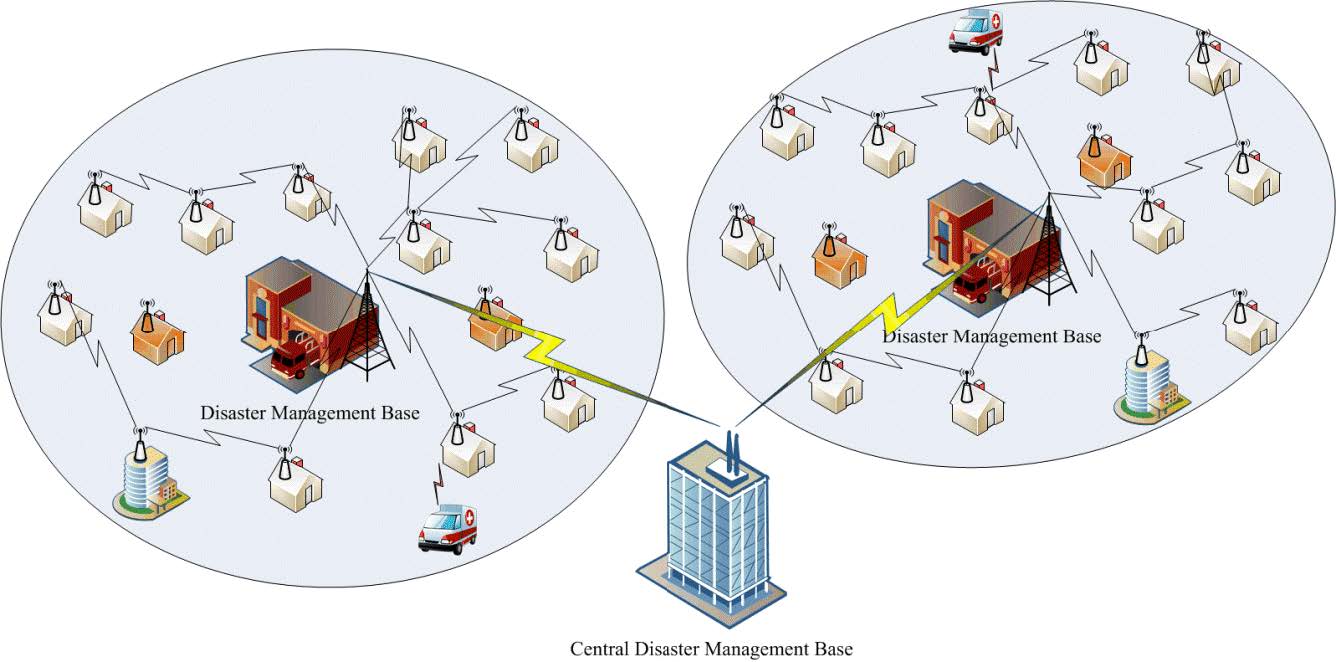
The project centers on a cognitive radio ad-hoc network that serves as a dedicated communication backbone for disaster management.
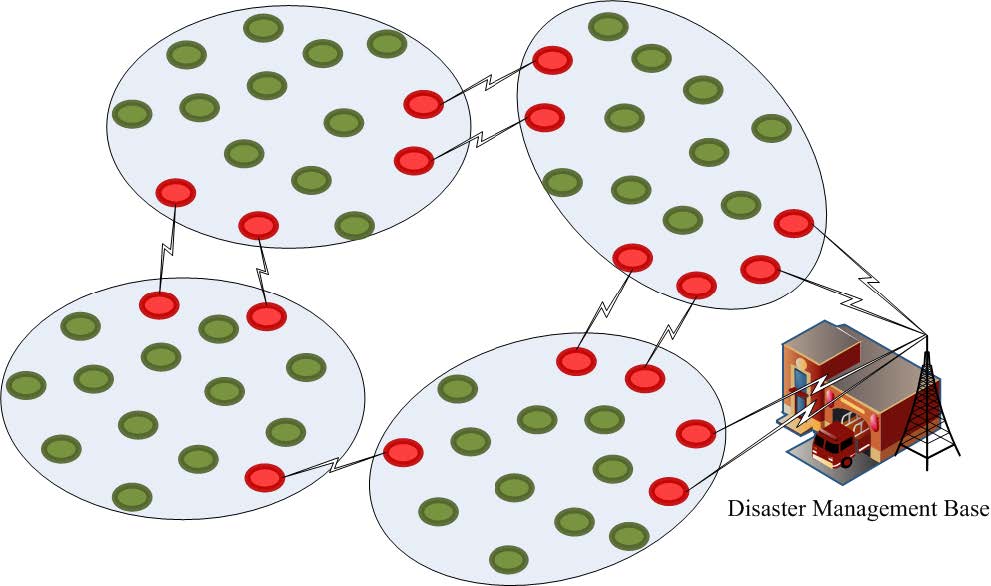
- Each node is deployed in buildings and participates in a multi-hop, cooperative ad-hoc network that forwards data to hardened crisis-management stations.
- Nodes apply cognitive radio techniques: they sense the spectrum, act as secondary users, and dynamically select frequency bands depending on primary user activity and local interference.
- Clusters of nodes share spectrum information, while gateway nodes connect clusters and relay aggregated traffic toward crisis centers.
- City-wide coverage is realized through multiple protected stations (e.g., crisis centers) interconnected with wired or satellite backhaul.
Node behavior, priorities, and routing
Each node operates as an intelligent sensing and forwarding element in the network.
- Event detection: local sensors detect hazards (e.g., earthquake or structural impact) and trigger generation of emergency messages with context.
- Priority model: every message receives a priority between 0 and 1, derived from factors such as local damage severity, estimated occupancy, secondary hazard risk, and strategic importance of the building.
- Queuing: messages are stored in per-node queues where higher-priority items are transmitted earlier to reduce delay and loss under congestion.
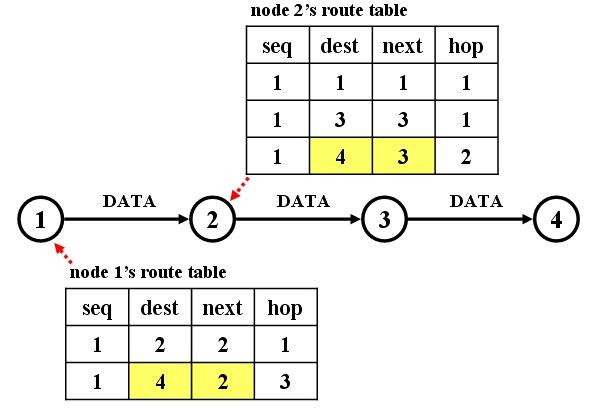
- Routing: ad-hoc routing (e.g., AODV) discovers and maintains multi-hop paths toward the nearest crisis-management station via on-demand route-request/route-reply exchanges.
- Spectrum agility: when a primary user is detected or interference becomes severe on a given band, nodes switch to an alternative band while preserving connectivity.
Hardware realization (SCH & PCB)
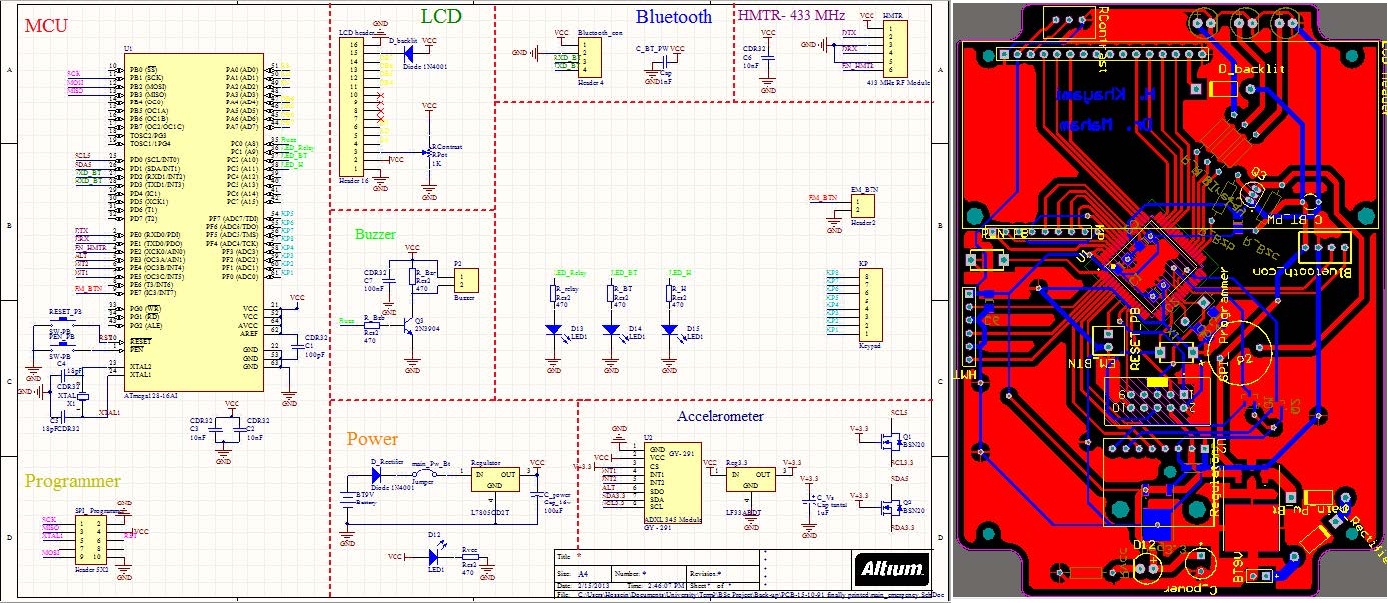
To validate the concepts at the physical layer, a representative embedded node was designed and implemented, including schematic and PCB.
- Processing and interfaces: an ATmega128A microcontroller provides sufficient processing power and multiple serial interfaces for interfacing with radios and sensors.
- Radios and bands: a 2.45 GHz ISM link (Bluetooth) is used as the main short-range channel, with a 433 MHz ISM link acting as an alternative band for modeling spectrum switching.
- Sensors and local interface: an ADXL345 3-axis accelerometer detects shocks, earthquakes, and device motion; a character LCD, LEDs, buzzer, and optional keypad support local status and interaction.
- Schematic and PCB: a custom schematic and board integrate MCU, RF modules, accelerometer, power circuitry, and connectors in a compact design suitable for installation in buildings.